Beppu Hot Springs, Old and New: From Suginoi Hotel to the Steam-Filled Streets of Kannawa

Author:Marina Betschart

Japan has no shortage of towns worth visiting for their hot springs. This time, my destination was Beppu in Oita Prefecture.
Hot springs can be found near the station, in residential neighbourhoods and along the hillsides. White plumes of steam rise from all corners of the city. Here, hot springs are woven into the very fabric of everyday life.
On this trip, I experienced the culture of Beppu hot springs in two ways: through a stay at a modern resort and a walk through the town's historic hot spring district.
Suginoi Hotel: Eight Decades of Evolution
For this trip, I chose Suginoi Hotel, a hot spring resort perched on the hills overlooking Beppu.
Founded in 1944, the hotel celebrated its 80th anniversary in 2024.

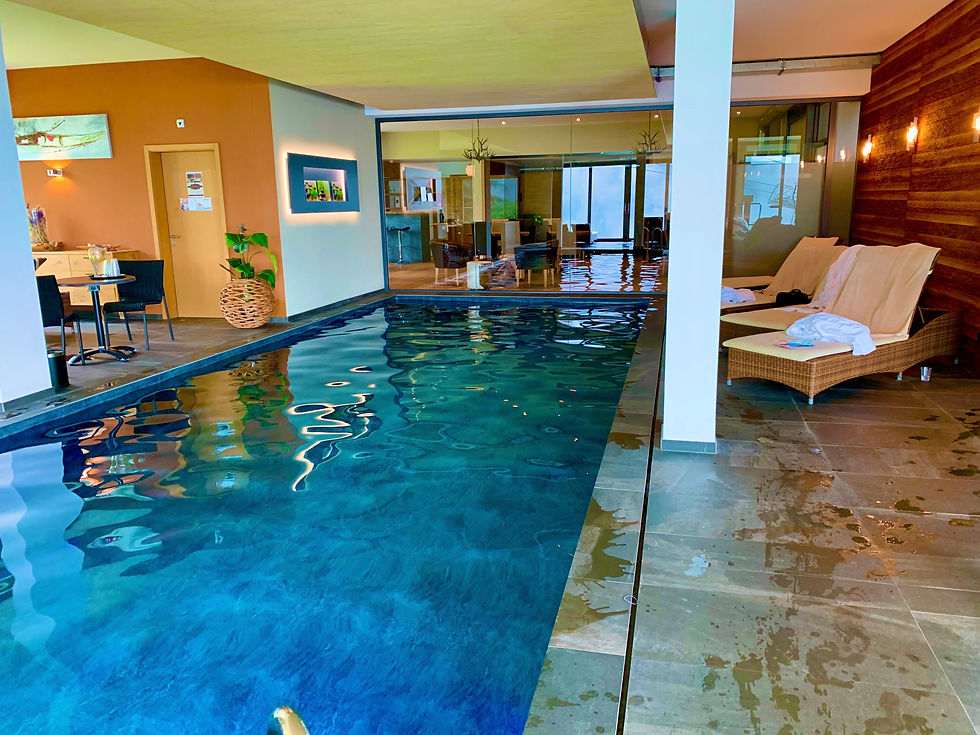
Over the decades, it has grown into a large-scale resort, adding swimming pools, bowling facilities and restaurants along the way. A major milestone came in 2003 with the opening of Tanayu, its panoramic open-air baths.
Arranged across five terraced levels like rice paddies, the baths offer sweeping views of Beppu Bay and the city below.
Soaking in the hot water while looking out over Beppu has become one of the hotel's signature experiences.
The resort continued to evolve with the opening of Niji Kan in 2021, its flagship building Sora Kan in 2023, and Hoshi Kan in 2025. The opening of Hoshi Kan also marked the completion of a major redevelopment project that began in 2019.
A Stay at Hoshi Kan
Hoshi Kan, the newest accommodation building at Suginoi Hotel, was where I stayed.
Stepping inside, I was greeted by bright, contemporary interiors and a fresh, modern atmosphere. Yet beyond the windows lay a familiar sight: the city of Beppu, with steam drifting into the sky.
The contrast between the new building and the timeless hot spring landscape was striking.
On the top floor, Wa Dining Hoshi offers a buffet centred on Japanese cuisine. The selection includes dishes made with local ingredients and fresh fish, alongside favourites such as sushi and sashimi.
Sake, shochu and other drinks were also available, with free-flowing drinks included in the dinner buffet — another welcome touch.
Each accommodation building at Suginoi Hotel has its own character, with plenty for guests of all ages to enjoy.
During my stay, I realised that this was not simply somewhere to return to after a day of sightseeing. The hotel had become a destination in its own right.
A soak in the hot springs, time to play, a leisurely meal and a quiet moment back in the room.
Sometimes, that is all the luxury a holiday needs.
Kannawa | Walking Through a Town of Steam

The following day, I headed to Kannawa, a district that captures the spirit of Beppu's hot spring culture.
Walk along its streets and you will see steam rising from all directions.
The natural steam is used in a traditional cooking method called jigoku-mushi, while geothermal heat has long played a part in everyday life.
This is what makes Kannawa so special. Hot springs are not simply places to visit; they are part of how people live.
During my visit, I stopped at two very different hot springs.

Hyotan Onsen: A Century of Bathing Tradition
Hyotan Onsen was founded in 1922.
According to its official website, the story began when the founder struck hot spring water while searching for a way to ease his wife's rheumatism.
The original gourd-shaped stone bath, built when the establishment first opened, can still be found in the women's bathing area today.
Knowing that this place has welcomed bathers for more than a century made the experience feel like a small encounter with Beppu's history.
One of Hyotan Onsen's defining features is its use of undiluted, free-flowing spring water.
The naturally hot water is cooled using a bamboo device called Yumetake, allowing guests to bathe without the need to add cold water.
There is plenty of variety, too, from large communal baths to sand baths, steam baths, waterfall baths and open-air baths.
It offers a very different experience from a large resort such as Suginoi Hotel — one rooted in a long-standing bathing tradition.
A Mineral Mud Bath at Bozu Jigoku
My second stop was the mineral mud bath at Bozu Jigoku.
Here, hot mud bubbles up from beneath the ground with a distinctive, rhythmic gurgle.
The name Bozu Jigoku, or "Monk's Hell", is said to come from the rounded bubbles of mud, which resemble the shaved heads of Buddhist monks.
Surrounded by such visible geothermal activity, I tried the mineral mud bath.
Unlike a typical clear-water hot spring, this bath contains fine particles of mud. The sensation of the water enveloping my body was unlike anything I had experienced in an ordinary bath.
With heat rising from deep underground, it was a chance to feel the natural forces that shape Beppu.
Bathing at Bozu Jigoku brought me closer to the geothermal landscape in a way that simply looking at it could not.
Beppu | Where Two Eras of Hot Spring Culture Meet
Throughout my trip to Beppu, I had the feeling that two different eras were unfolding side by side.
On one hand was Hoshi Kan, which opened in 2025 — a comfortable, contemporary hot spring resort.
On the other were Hyotan Onsen, with more than a century of history, the steam-filled streets of Kannawa and the mineral mud baths at Bozu Jigoku.
The hotel and the town.
Modern resort life and traditional bathing.
They may seem worlds apart, yet both are connected by the same hot spring culture.
Suginoi Hotel itself, with more than 80 years of history and a constantly evolving approach to hospitality, reflects something of Beppu's character.
The hot springs remain, but the ways people enjoy them continue to change.
For me, the most memorable part of this journey was experiencing both: the contemporary comforts of Hoshi Kan and the bathing traditions that have been passed down through generations.
In Beppu, hot springs are more than an attraction. They are a reason to travel and a way to connect with the place itself.
Next time, I would love to try another of the city's many hot springs.
With that thought lingering, I said goodbye to Beppu.
Information
Suginoi Hotel
1 Kankaiji, Beppu, Oita 874-0822, Japan
Tel: +81 977-24-1141
Official website: https://suginoi.orixhotelsandresorts.com/
About Author

Marina Betschart
Originally from Kobe, Japan, Marina has been living in Switzerland since 2014 and is a mother of two. Her interests range from beauty, health and cooking to parenting, travel, food, languages and camping.
Sociable by nature, she enjoys connecting with people, while also valuing time on her own—whether reading, cooking or watching her favorite TV series.
Drawing on her experiences of life in Switzerland and the discoveries she makes in everyday life, Marina shares a variety of topics in a thoughtful, approachable and easy-to-understand way.